MOSIL Lubricants Conducts Three-Day Residential Training on Steel Industry Applications for Its Sales Team and Channel Partners

MOSIL Lubricants Conducts Three-Day Residential Training on Steel Industry Applications for Its Sales Team and Channel Partners

July 21 2026

Workshop-format programme built around MOSIL's Quadra Approach; participants worked through live application cases and visited the company's Palghar manufacturing plant

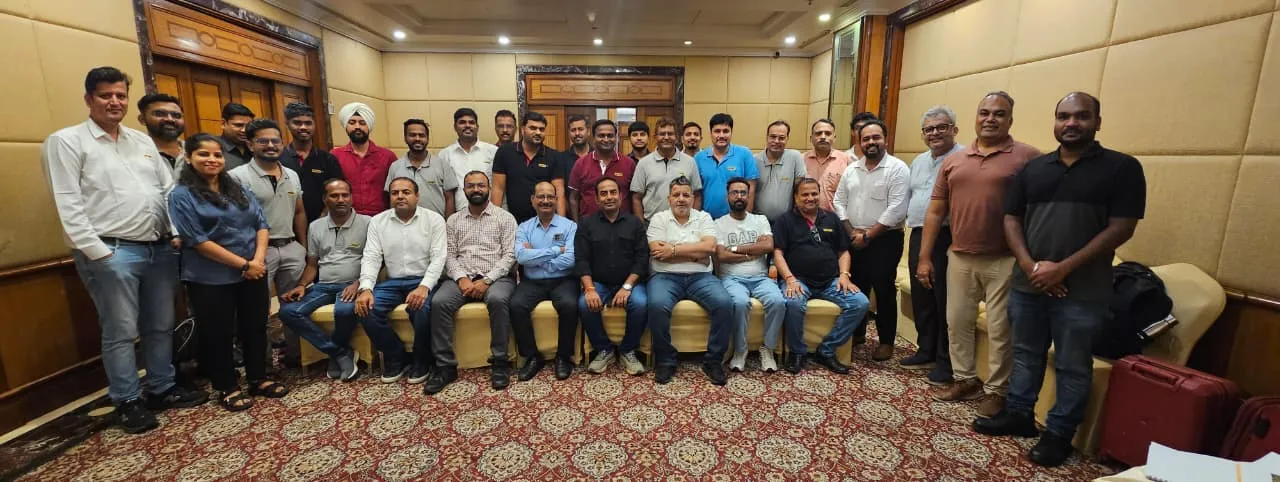
MOSIL Lubricants Pvt. Ltd., a Mumbai-based manufacturer of specialty industrial lubricants, conducted a three-day residential training programme in Mumbai from July 9 to 11, 2026, focused on steel industry applications. The programme was conducted by MOSIL's in-house technical team and brought together 29 participants from MOSIL's sales team and its channel partner network from across India

The programme reflects MOSIL's view that specialty lubrication in the steel sector is an application problem before it is a product problem. Steel plants run bearings, gears, wire ropes and open gears under heavy loads, high temperatures and continuous duty. Selecting the right lubricant for such conditions requires a structured diagnosis of the application, not a product catalogue.

The training was built around MOSIL's Quadra Approach, the company's four-step method for every steel application: **Understand → Validate → Recommend → Implement**.

1. Understand:  identify the actual pain points on the shop floor and the maintenance team's expectations from a solution

2. Validate:  Verify the application conditions and operating data on site before any recommendation is made

3. Recommend:  Offer a solution backed by relevant data, performance reports and technical values

4. Implement:  Put the solution to work and prove it through actual field trials

Participants were also trained on preparing the TriboIntel Report, MOSIL's technical trial document that records field trial conditions, measurements and results for each application.

Unlike a conventional classroom programme, the training was run as a workshop. Each participant received a technical binder with only select information filled in. The remaining data had to be worked out by the participant, based on his or her own understanding of the application and the Quadra Approach.

“A steel plant does not buy grease. It buys a solution to downtime. Our team and our partners must be able to diagnose an application before recommending a product. This training was designed so that every participant works through that diagnosis himself, with real data in hand, instead of listening to a presentation about it" said Sachin Punde, National Sales Head – MOSIL Lubricants

“The binder format forced us to think like the customer's maintenance engineer. I am going back with a method I can apply on my next steel plant visit, not just notes" said  a participant who is a channel partner for Steel Industry in South India

The programme included a visit to MOSIL's manufacturing plant at Palghar, one of the company's two manufacturing locations, the other being at Mhape, Navi Mumbai. Participants observed grease manufacturing and quality testing processes at MOSIL’s Manufacturing Premises.

About MOSIL Lubricants Pvt. Ltd.

MOSIL Lubricants Pvt. Ltd. is a Mumbai-based manufacturer of specialty industrial lubricants, serving the steel, mining, robotics and food processing sectors, among others. The company operates two manufacturing plants in Maharashtra, at Palghar and Mhape (Navi Mumbai) and works with customers as a technical application partner under its Performance Multiplier platform.
Suggested Blogs

Anti-Friction Coatings
Technical Concepts

Anti-Friction Coatings

Different types of rust preventive coatings are used in the industry and Anti-Friction Coatings are used as a special rust preventive surface technology solution to meet specific requirements of the industry. Why Low friction Coatings required? In various industry applications, component surfaces need to be protected against rust and corrosion as well as friction and wear. Anti-friction coatings perform duel function of coating as well as a lubricant to control frictional properties of the surfaces. Such coatings are ideal for high temperature and load environments where traditional coatings tend to break down. These coatings are also referred as “Lubricating paints”, “Solid Lubricants Coatings”, “Dry Lubricant Coatings” or “Bonded Coatings”. How Anti-friction Coatings works? Anti Friction coatings are made up of solid lubricants dispersed in paint like liquid medium consisting of resin blends and solvents. The micro-sized solid lubricants prevent friction occurring between mating surfaces under various temperature, load, speed and environmental conditions. Typical solid lubricants used in bonded coatings are MoS2, Graphite or PTFE etc. AF coatings form a slippery or gliding film which can reduce friction between metal to metal, metal to plastic and plastic to plastic surfaces. Advantages of Anti-Friction Coatings: Dry & clean lubricant film along with improved aesthetic look of the machinery parts. Protection against rust, corrosion, dirt, dust and humid environment. Resistant to water, mineral oils, chemicals, UV radiation or use in a vacuum. Optimized friction coefficients to reduce friction occuring between closely placed surfaces or moving parts. Suitable for applications at temperatures ranging from -70 °C to +400 °C. Capable to absorb shocks, reduce torque and eliminate noises. Parameters to consider while selecting the right AF Coatings: AF Coating selection depends on coating thickness, adhesion, curing time, drying time, temperature range, coefficient of friction, binder type and type of solid lubricants. Molybdenum disulfide based coatings are suitable for parts with heavy load carrying capacity subjected to high operating temperatures and optimized coefficient of friction. PTFE based AF coatings are used for lifelong applications which require low coefficient of friction and high temperature resistance. Graphite based AF coatings are effective to prevent scoring and galling of the surfaces at high temperatures even in moist environments. AF coatings can be applied by spraying, dipping, brushing etc. Depending upon the thickness of the layer of the coating, the method for its application is decided. Typical application area of Anti-Friction Coating: Dry lubricant coatings are used in various industries including automotive, mining, petroleum, power generation etc. Typical applications include nuts, bolts, hinges, chains, screw connections, springs, glides, gaskets, threaded joints and flanges, couplings, locking mechanisms, brake pad backing plates, shock absorbing systems, miniature gears etc.  

Technical Concepts | July 21 2026

Read Blog
OPEN GEAR LUBRICATION: SELECTING THE RIGHT INDUSTRIAL LUBRICANTS FOR HARSH OPERATING CONDITIONS
Technical Concepts

OPEN GEAR LUBRICATION: SELECTING THE RIGHT INDUSTRIAL LUBRICANTS FOR HARSH OPERATING CONDITIONS

Abstract: Open gear drives, or girth gears are a common method of power transmission since the beginning of the Industrial Revolution. Open gear drives are the economical alternative for use in applications having the high load-carrying capacity and long service life under severe shock load conditions. Characteristics like flexibility in the machine’s design have made open gear drives the most common type of drive used for ball mills and grinding mills, kilns, dryers, draglines and shovels. Broadly, there are two types of open gear drives: Type 1 - utilizes a rack Type 2 - utilizes a series of gears. OPEN GEAR LUBRICANT REQUIREMENTS AND INDUSTRIAL LUBRICANTS STANDARDS Open gear applications associated with ball mill and finishing mill applications are some of the most difficult applications for the lubricant. Generally, these types of open gears operate at low pitch line velocities and under heavy loads. Recent designs of equipment require open gears to transmit increasingly higher loads. Due to these considerations, an open gear lubricant possesses the following characteristics and properties: Retention of lubricant on the surface of gear Resistance to wet environment. Protection against wear & corrosion Load carrying capacity Vibration damping capability Sprayability and dispensability TYPES OF OPEN GEAR LUBRICANTS Currently, the lubricants used by both type open gears consist of the following: 1 Asphaltic lubricant & Cutbacks 2. Semi Fluid Greases 3. Polymer-thickened types 4. High-viscosity synthetics Each of these OG lubricants possesses performance and compositional characteristics that define their capabilities. ASPHALTIC TYPE & CUTBACKS Asphaltic-type open gear lubricants are also known as black oils. This type of open gear lubricant is most commonly used in older equipment and has been used for years. They are formulated from high-viscosity cutbacks of the refining process of mineral oils. It contains a high level of asphalt and a volatile solvent diluent, which is used in the application of the product. The residual black oils used in the formulation have viscosity of 643 cSt or higher at 100ºC. eg. mobil 375 LC. Operating on the principle of an oil film separating the mating surfaces of the pinion and the gear, The Asphaltic type lubricants are applied by an automatic spray system. Once applied, the solvent diluent evaporates, leaving behind a viscous coating of lubricant. Also retains the wear debris and dust from the environment SEMI FLUID GREASES These open gear lubricants contain medium- to high-viscosity petroleum or synthetic base oil. They contain a thickener system such as an aluminum complex. solid lubricants and EP additives such as molybdenum disulfide and graphite and rust inhibitors. These types of open gear lubricants can be used in the lubrication of both unidirectional as well as reversible type open gears. The following has been observed when these type open gear lubricants have been used: They are more fluid than the asphaltic type. Used through an intermittent centralized lubrication system in open gears, resulting in simplified lubrication, a reduction in consumption. Formation of a tacky lubricant film which is easier to clean off for maintenance inspections, repairs and welding. POLYMER THICKENED TYPE These types of lubricants contain medium- to high-viscosity mineral or synthetic base oils that are thickened with a polymeric thickener, EP agents, and solid lubricants to enhance their thin film and boundary film performance. Products that fall in the classification contain volatile solvents for ease of application. These types of open gear lubricants are typically NLGI # 00 to # 0 consistency. Polymer-thickened open gear lubricants are thixotropic in nature. The thixotropic property allows better lubrication in the loaded zone and aids in their ability to be applied by standard intermittent spray systems or be used in splash or idler immersion systems. Once applied to the surface of the open gearing, polymer-thickened open gear lubricants form a thick, tenacious, opaque to transparent film coating on the gears that can be observed during inspections. HIGH VISCOSITY SYNTHETIC OILS These are formulated from medium- to very high-synthetic base fluids, such as polyalphaolefin (PAO) and polyol esters, or a combination of both, and contain EP additive. Some products may also contain solid lubricants such as molybdenum disulfide that is dispersed into the lubricant in a colloidal suspension, or contain viscosity index improvers to enhance the viscometric properties of the synthetic base fluids. Also, the use of viscosity index improvers has traditionally been considered unacceptable by gear manufacturers. INSTALLATION OF OPEN GEAR IN AN EQUIPMENT 1st Stage - Priming Priming Lubricant cleans the tooth flanks and protects from damage during the initial installation of the gear and 1000cSt Viscosity base oil ensures thick oil film which helps in cleaning the wear debris. 2nd Stage - Running In Running-in Lubricants are applied to a new or repaired gear to increase the contact surface of the gear tooth. The Lubricants of 460 cSt are applied on the No load to 25 % load condition of the open gear mechanism. 3rd Stage - Operational Operational lubricants provide excellent gear protection with low consumption rates. Here 16000 cSt base oil viscosity lubricant is sprayed on the tooth flank as per the lubrication schedule in full load conditions. 4th Stage - Repair Repair Lubricants recondition the tooth flank to quicken the increase of load-bearing area surface to extend the life of your gears. Expertise is required for carrying out such repair jobs. SCOPE FOR MOSIL When we are looking for the optimum lubrication solution, there’s always a space for a trustworthy lubrication partner. Here a Lubricant supplier or Manufacturer plays a key role in providing the required solution and handling and solving the pain points of the customer. Mosil Lubricant is a leading Manufacturer of Industrial lubricants. Mosil with its understanding of gear drive mechanisms tries to resolve the industrial lubricants-related issues build a trust-based relationship with its satisfied customers and remain a Partner In Progress. Know more about MOSIL at www.mosil.com or write at enquiry@mosil.com.  

Technical Concepts | July 21 2026

Read Blog