Industrial lubricants have always been essential to the reliability and efficiency of machinery. For decades, most
plants relied on mineral oil–based conventional lubricants because of their low purchase price and easy availability.
Today, however, industries are moving toward high-performance synthetic industrial oils and greases. In this blog,
we’ll explore how synthetic greases outperform conventional greases, real-world application examples and the
qualitative as well as quantitative benefits they deliver.
🔹 What Are Industrial Greases - and What’s Changing?:
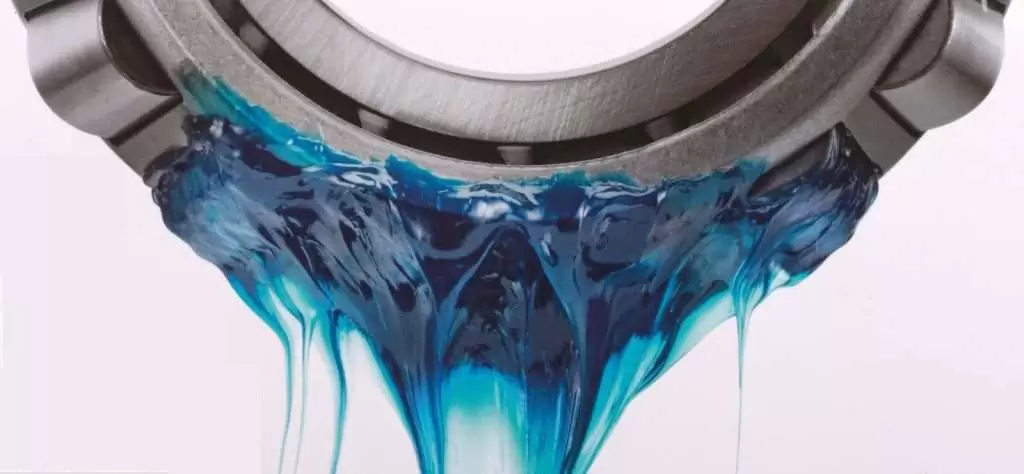
Industrial greases are semi-solid lubricants made by combining a base oil with a thickener and additive packages.
Most traditional greases use mineral oil as the base fluid. Although they are economical at the time of purchase, these greases may not perform well in high temperatures, high speeds or heavy-load conditions. Also conventional mineral lubricants were designed for earlier generations of equipments and often struggle to meet expectations of modern machineries which run faster, longer and under tighter efficiency targets than ever before.
Synthetic greases, on the other hand, use engineered base stocks such as: Polyalphaolefins (PAO), Esters,
Polyglycols, Perfluoropolyethers (PFPE), Silicone-based fluids. These synthetics are chemically tailored to meet
demanding performance needs - delivering longer life, better temperature stability, improved oxidation resistance and lower friction. As a result, industries are moving from a price-per-kg mindset to a performance-per-hour mindset. The real question for industry today is not “Are synthetics necessary?” but rather, “How much are conventional lubricants costing us in hidden losses?
🔹 Benefits of Synthetic Greases Over Conventional Mineral Oil Based Greases :
| Property | Mineral Lubricants | Synthetic Lubricants | Practical Benefit to Equipment |
| Molecular Structure | Mixed, irregular hydrocarbon chains | Uniform, engineered molecules | Stronger and more stable lubricating film |
| Viscosity Index | Moderate | Very high | Stable oil film across wide temperatures |
| Oxidation Resistance | Limited | Excellent | Longer oil life, reduced sludge & varnish |
| Thermal Stability | Moderate | Superior | Reliable performance at elevated temperatures |
| Low Temperature Fluidity | Average | Excellent | Easy start-up, reduced wear during cold conditions |
| Volatility | Higher | Very low | Lower oil consumption and top-ups |
| Friction Coefficient | Higher | Lower | Energy savings and reduced heat generation |
| Shear Stability | Moderate | High | Consistent viscosity under shearing |
| Water Resistance | Limited | Excellent | Improved protection in humid environments |
🔹 Industry Insights: How Different Sectors Benefit With Synthetic Greases
- Paper : Better heat- and moisture-resistant lubricants reduce failures in dryer and calendar sections.
- Cement : Better film strength protects crushers and mills from dust and shock loads.
- Steel: Better thermal stability supports rolling mills under extreme heat.
- Food: NSF-compliant synthetics provide long term lubrication compared to NSF-compliant mineral based greases.
- Manufacturing : Long life grease formulations cut routine lubrication tasks.
- Mining & Construction: Adhesive synthetic lubricants protect in wet, dusty conditions with longer intervals.
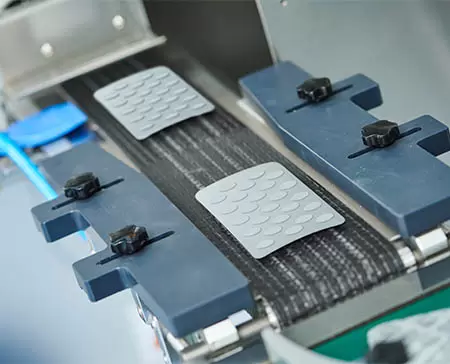
- Auto Assembly : Synthetic greases are used in conveyors and oven bearings to provide non-drip lubrication.
🔹 Synthetic Greases Add Value Even in Normal Conditions :
It is often assumed that synthetic lubricants are needed only for extreme temperatures or heavy loads. In reality, even machinery operating at moderate speed, normal load and clean environment gains clear benefits.
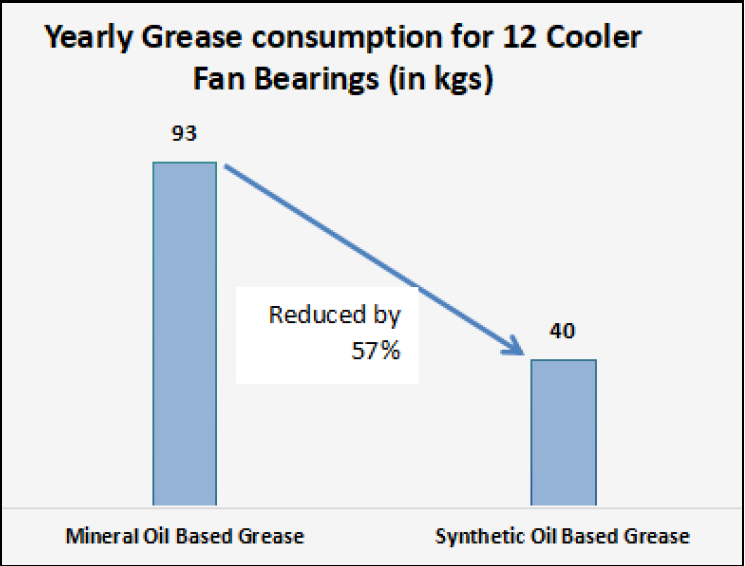
A simple example can be seen in fan bearings in various industries operating at moderate speed, normal load and temperatures around 60–80°C.
With a conventional mineral-based grease, the base oil gradually oxidizes and requires frequent relubrication intervals. When the same bearing is lubricated with a synthetic grease, the grease maintains its consistency and oil release property for a much longer period due to superior oxidation stability, stable oil film formation and lower evaporation loss. This leads to reduced bearing temperatures and longer regreasing intervals which results in reduced grease consumption.
Reduced grease consumption in turn reduces Total Cost of Ownership (TCO) in terms of reduced manpower requirements, lowered energy losses from friction, improved equipment efficiency and reduced bearing failures, lesser downtime. This demonstrates that synthetic bearing greases provide overall cost savings and add reliability and efficiency benefits even in everyday, non-critical operating conditions.
🔹 Measurable Business Benefits :
Companies switching to synthetic industrial greases commonly experience cost savings with :
- 2–10 times longer regreasing intervals.
- 20–50% improvement in component life
- 20–60% reduction in grease consumption
- Noticeable reduction in energy consumption
- Lower maintenance costs
- Reduced downtime
- Reduced manpower requirements.
When choosing a lubricant for your application, it is important to consider factors such as the operating temperature, load, speed and environment. Consult with a lubrication expert or the equipment manufacturer to select the best lubricant for your needs.

























![Gear Drive Lubricant Selection [Gearbox Lubricants]](https://mosil.com/assets/uploads/blog/blog_1754993108_689b11d41226a.webp)





![The Ultimate Guide To Grease Thickeners [Thickening Agents]](https://mosil.com/assets/uploads/blog/blog_1754991852_689b0cec60a8a.jpg)