


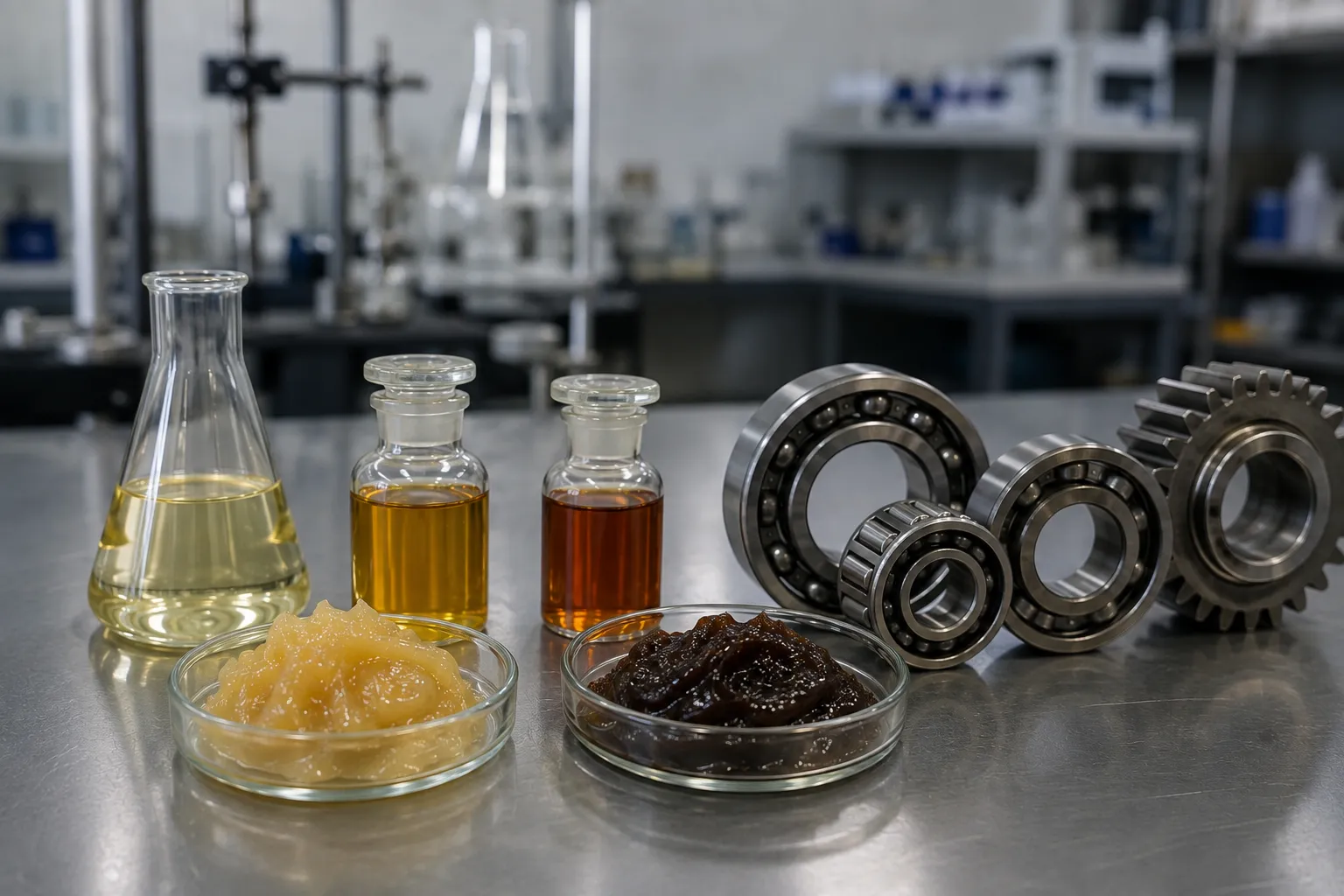
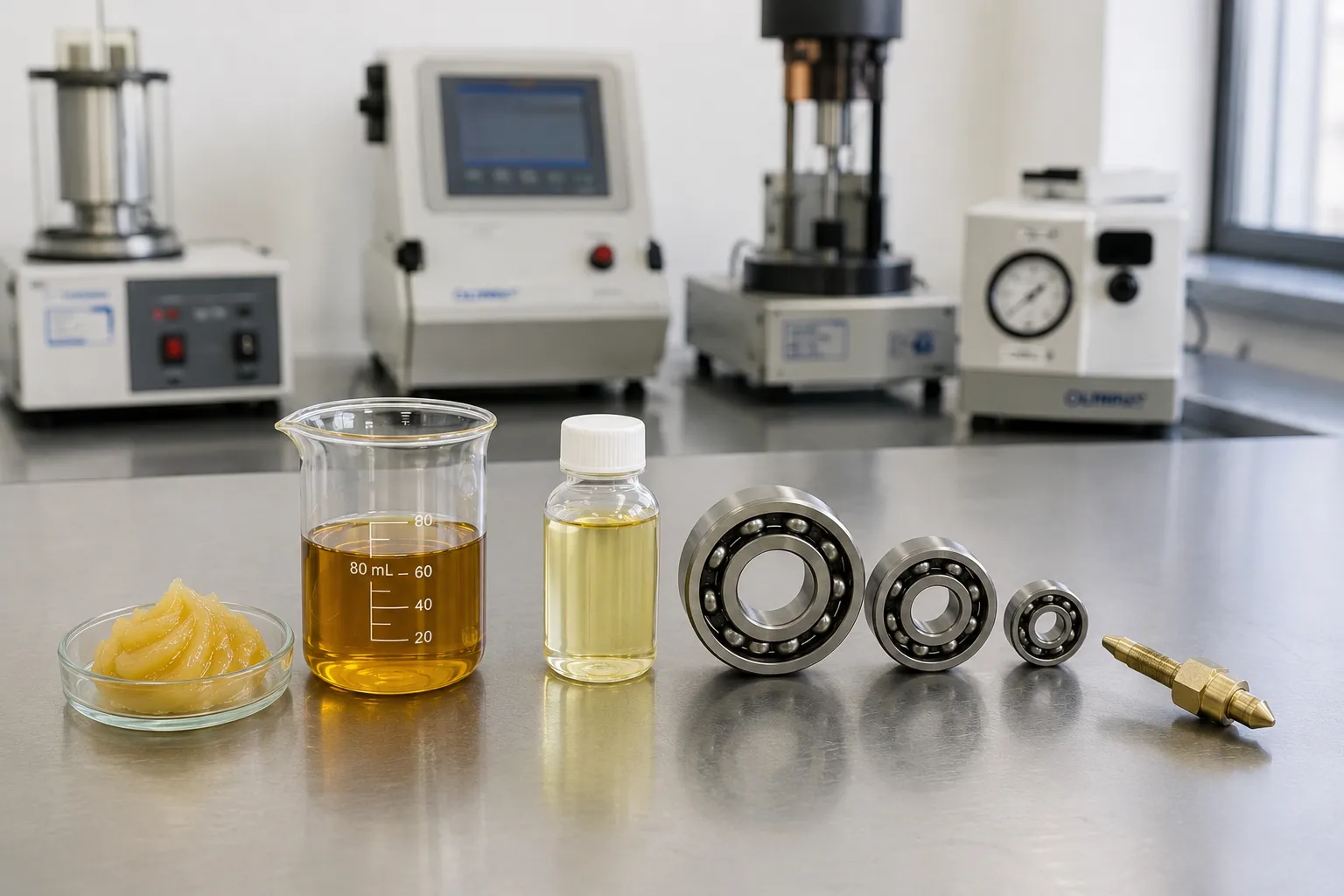
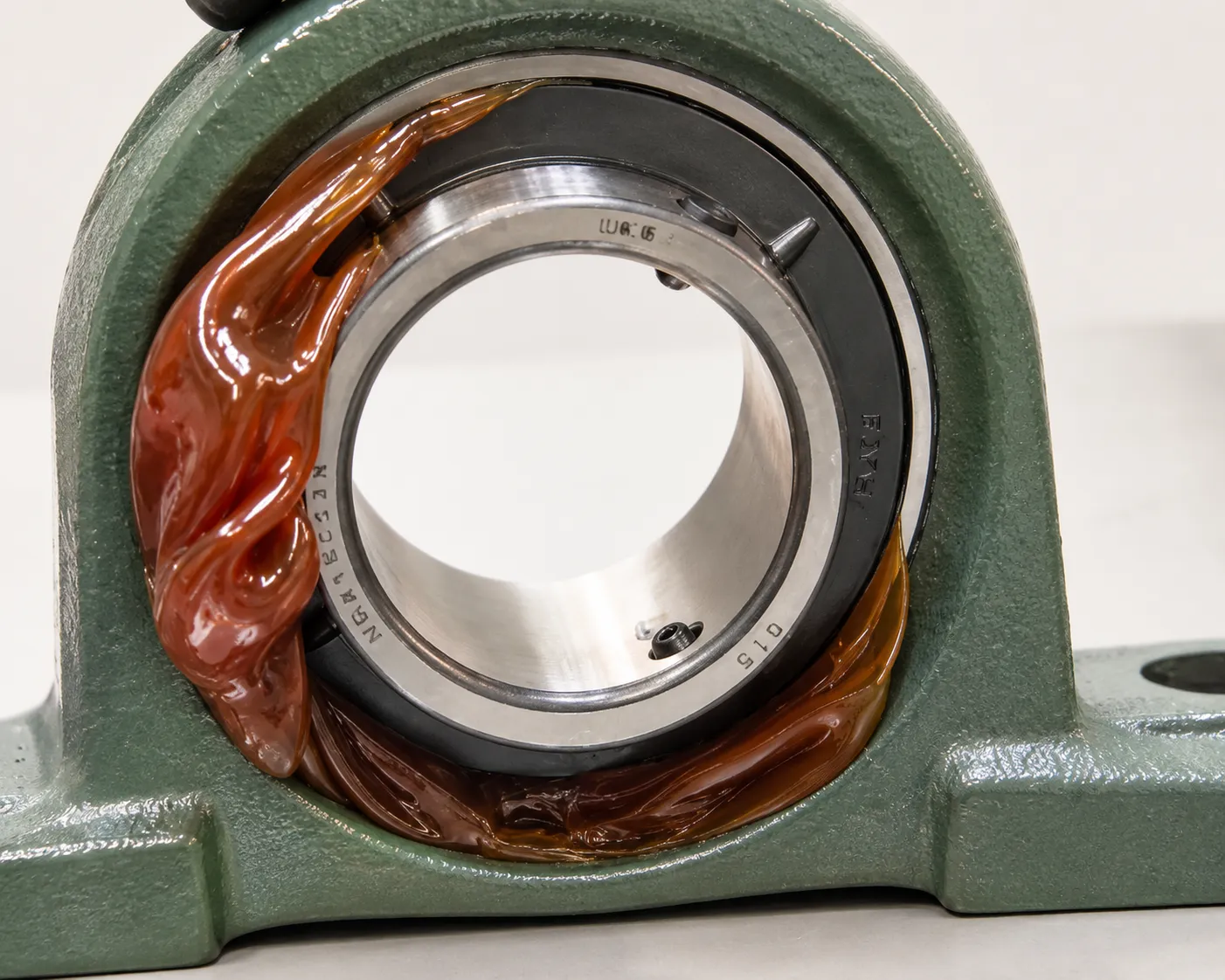
Although greases typically exhibit a semi-solid appearance, it's essential to note that oil comprises 80% to 90% of the overall grease composition. Therefore it is inportant to explore how various aspects of base oils influence and shape the lubricating grease technology.
IMPORTANCE OF BASE OIL QUALITY IN GREASE TECHNOLOGY:
Base oil quality is directly related to the grease's ability to protect components from wear. High-quality base oils, often characterized by low impurity levels and good stability, contribute to effective lubrication, thermal stability, oxidation stability, shear resistance etc. ensuring the longevity of machinery.
Some base oils, such as synthetic oils, offer improved performance at high temperatures, while others, like mineral oils, may have limitations. Properites of base oils are variable in terms of viscosity index (VI), thermal & oxidation stability, lubricity, high & low temperature performance etc. Choice of the right base oil type is essential to ensure the grease maintains its lubricating properties within the expected temperature range.
| Description | API Category | Description | Chemistry | Properties for Greases |
|---|---|---|---|---|
| Mineral Base Oil | Group I | Conventional mineral oil | Hydrocarbons | Good lubricity, economical |
| Mineral Base Oil | Group II | Highly refined mineral oil | Saturated hydrocarbons | Good oxidation and thermal stability |
| Highly Refined Base Oil | Group III | Severely refined mineral oil | Highly saturated hydrocarbons | High VI, good thermal stability |
| Synthetic Base Oil | Group IV | Synthetic hydrocarbon oil | PAO | Excellent temperature and oxidation stability |
| Specialty Synthetic Oil | Group V | Other synthetic base oils | Ester, PAG, silicone, etc. | Specialty high/low-temperature and chemical performance |
IMPACT OF BASE OIL QUANTITY ON GREASE PERFORMANCE
Base oil quantity directly influences the thickener-to-oil ratio, leading to an increase or decrease in NLGI consistency or pumpability. In the absence of sufficient base oil, the grease may fail to provide an effective lubricating film across a range of operating conditions, leading to increased friction and wear between moving parts. This can contribute to accelerated component degradation and reduced equipment lifespan. It is crucial to carefully balance the thickener-to-oil ratio to maintain the desired grease performance for a given application.
ROLE OF BASE OIL VISCOSITY IN GREASE EFFECTIVENESS :
Oil viscosity describes how easily an oil can flow. Higher viscosity oil based greases are generally better at supporting heavy loads by forming a thicker film between moving parts. Lower oil viscosity improves coverage and flowability of the greases at low temperatures and often chosen for high-speed applications. Greases with less variation of viscosity with temperature are often chosen for applications with variable temperature conditions. Using an oil with the appropriate viscosity provides optimal protection and reduces friction, which in turn minimizes energy consumption.
COMPATIBILITY OF BASE OILS IN GREASE CHANGEOVERS:
Grease compatibility refers to the ability of different greases to be used together without experiencing alterations in their physical or chemical properties, such as solidification or grease liquefaction. This aspect is crucial when transitioning from one grease to another within the same application.
Although thickeners play a pivotal role in deciding compatibility, it is also critical to consider the compatibility of base oils within the greases. Certain synthetic base oils may not be compatible with mineral oils and other types of synthetics. If the thickeners in the greases are compatible but the base oils are not, the resultant mixture can pose issues. Furthermore, when combining greases with markedly different viscosities, the resulting blend may showcase inconsistent performance and fail to deliver the intended lubrication. Hence, the type of base oil present in the greases must be taken into account when assessing compatibility.
WHEN CHOOSING A GREASE FOR YOUR APPLICATION, IT IS IMPORTANT TO CONSIDER FACTORS SUCH AS THE OPERATING TEMPERATURE, LOAD, SPEED AND ENVIRONMENT. CONSULT WITH A LUBRICATION EXPERT OR THE EQUIPMENT MANUFACTURER TO SELECT THE BEST GREASE FOR YOUR NEEDS.



































































![Gear Drive Lubricant Selection [Gearbox Lubricants]](https://mosil.com/assets/uploads/blog/blog_1788344519_6a97f8c75d604.webp)









![The Ultimate Guide To Grease Thickeners [Thickening Agents]](https://mosil.com/assets/uploads/blog/blog_1754991852_689b0cec60a8a.jpg)