

STRUGGLING TO ACHIEVE HRDRODYNAMIC LUBRICATION WITH YOUR INDUSTRIAL LUBRICANTS ??
Friction plays a large and essential role in everyday life in case of machines & humans although we usually never think about it.
As we know, necessary amount of friction is necessary to run all assemblies but excessive friction can be nuisance sometimes!! Hydrodynamic Lubrication with industrial lubrication is one of the method used extensively to support load and reduce friction. It is also known as full fluid-film, thick film or flooded lubrication. A thick film lubricant is interposed between the surfaces of bodies in relative motion. There has to be pressure build-up in the film due to relative motion of the surfaces.
STRIBECK CURVE

Stribeck curve (dotted line) maps the transition of friction from high (boundary) friction to low (hydrodynamic) friction. For soft, permeable contacts like articular cartilage, a divergence from the classical curve is described by an elastoviscous transition where contact compliance and permeability hinder the transition to hydrodynamic lubrication.

Classical or conventional lubrication theory has reached its fundamental limit in the energy losses reduction and new theories must be developed. In the case of the plain journal bearing which has been used as an illustration, the rotation of the shaft causes lubricant to move into the loaded zone. Since the shaft and bearing surfaces come closer together in the loaded zone, the entry into this zone is tapered, like a curved wedge. As the oil is forced to move into the narrower part of the wedge, the pressure increases, which is hydrodynamic pressure that supports the shaft load.
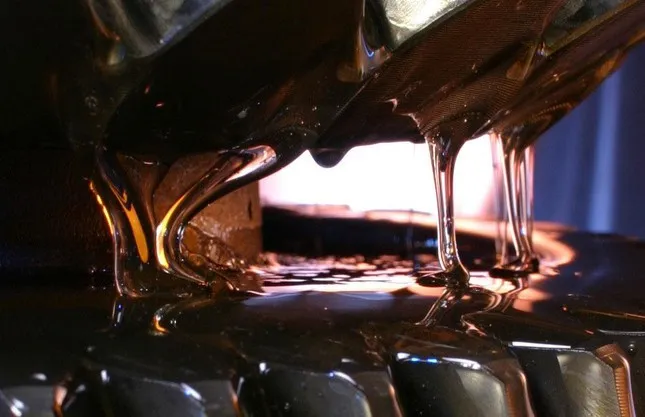
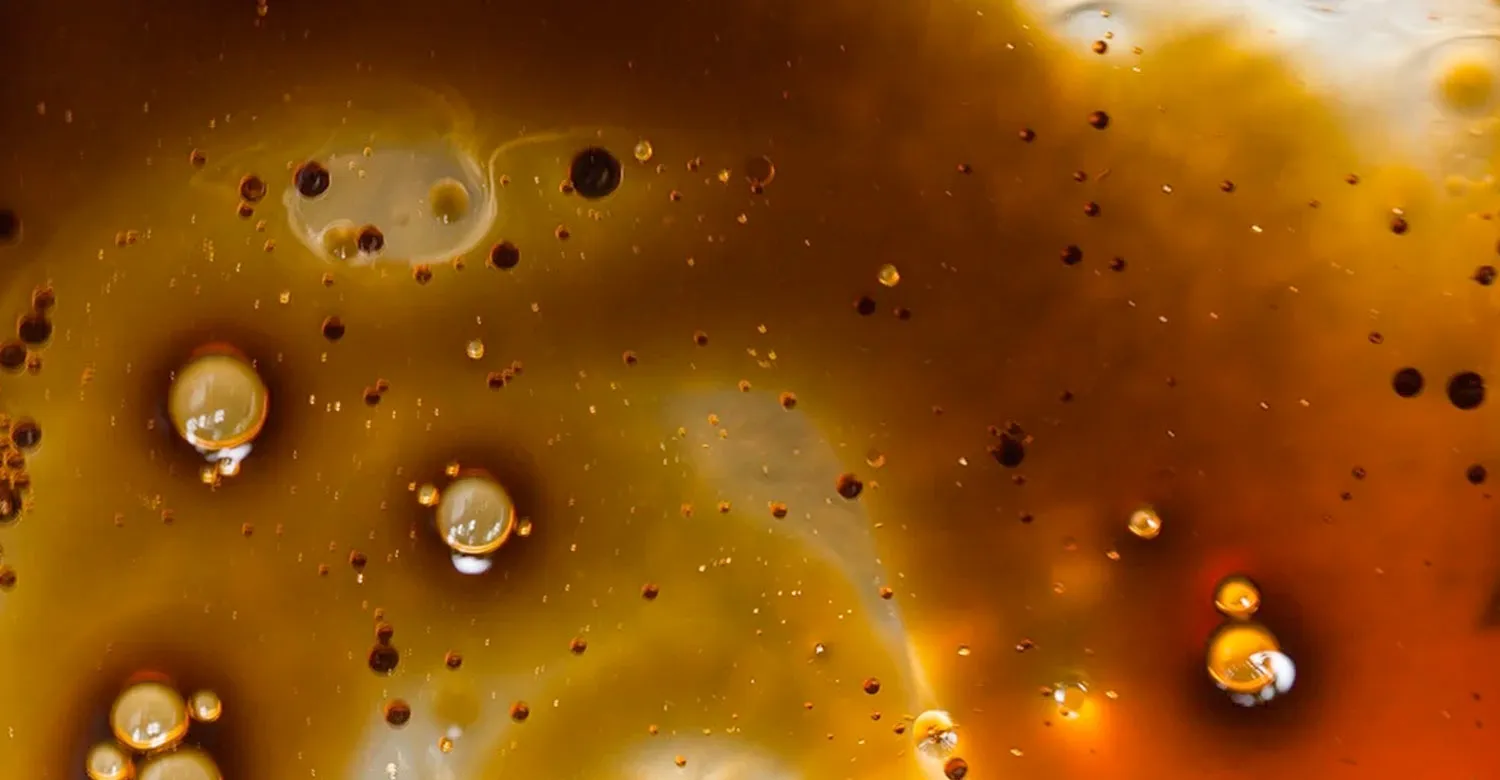
The microscopic aspect of the hydrodynamic lubrication can be observed from the following image:

The Hydrodynamic pressure is determined by -
- The viscosity of the oil
- Speed at which it is squeezed in to the wedge shaped zone

A similar pressure wedge is necessary in almost all systems which rely on the Hydrodynamic Lubrication. Hydrodynamic region is based on the Applied Load / Speed ( RPM ) ,Sliding Speed / Viscosity of Lubricant . Ideally in pure Hydrodynamic Lubrication the oil film should be just thick enough to ensure that there is no contact between the asperities on the two surfaces. In other words, the oil film thickness should be greater than the sum of asperity heights.In practice,new bearing surfaces will often be rougher than is desirable, and a small amount of contact may be permitted.
SCOPE FOR MOSIL
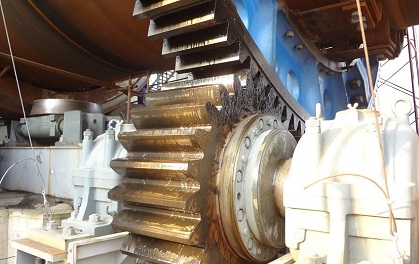
We at MOSIL cater to various industries such as Cement, Steel, Food & Pharma etc. Duringthe same we come across various challenging application and where MOSIL's experience and expertise helps customer choose the right lubricant for their applications.























































![Gear Drive Lubricant Selection [Gearbox Lubricants]](https://mosil.com/assets/uploads/blog/blog_1788344519_6a97f8c75d604.webp)




![The Ultimate Guide To Grease Thickeners [Thickening Agents]](https://mosil.com/assets/uploads/blog/blog_1754991852_689b0cec60a8a.jpg)