

SURFACE BLASTING, OFTEN REFERRED TO AS ABRASIVE BLASTING. IT IS AN IMPORTANT STEP IN MANY INDUSTRIAL APPLICATIONS BEFORE APPLYING COATINGS OR RUST PREVENTIVE OILS. HENCE, LUBRICANTS PROFESSIONALS NEED TO UNDERSTAND ABOUT DIFFERENT TYPES OF BLASTING PROCESSES .
Industrial Lubricants: Surface Blasting for Corrosion Protection
The primary objectives of the blasting process can vary depending on the specific application, but generally, the goals includes:
Surface preparation : Blasting is used to smooth rough surfaces. A clean surface is essential for the proper adhesion of coatings and the overall longevity of protective materials.
Surface Etching : To roughen smooth surfaces while using chemicals or other physical methods for improving the bonding characteristics of materials.
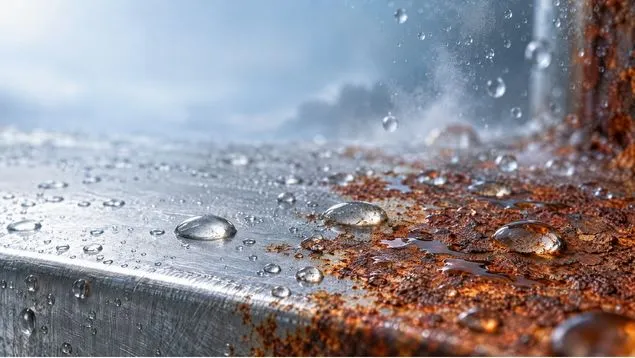
Rust Removal : To quickly remove the so-called "rust" that develops on the surfaces; not just from steel but also from copper, aluminum and other materials.
Black Scale Removal : To remove "Black scale" or "oxidized scale", also known as mill scale, that occurs on the target surface during the heat treatment process, such as the annealing of steel bars.
Cleaning : To remove oils, grease and other contaminants in applications where cleanliness is critical, such as in the aerospace and automotive sectors.
Deburring : To remove burrs, sharp edges and flash from metal, plastic, or composite components.
Coating Removal: To remove paint or stripping from a substrate.
Shot Peening : To induce strengthening of the surface of metal components.
Polishing any unevenness with a specific abrasive that is appropriate for the job
DRY TYPE BLASTING: A KEY SURFACE PREPARATION METHOD FOR CORROSION PROTECTION
Sand blasting
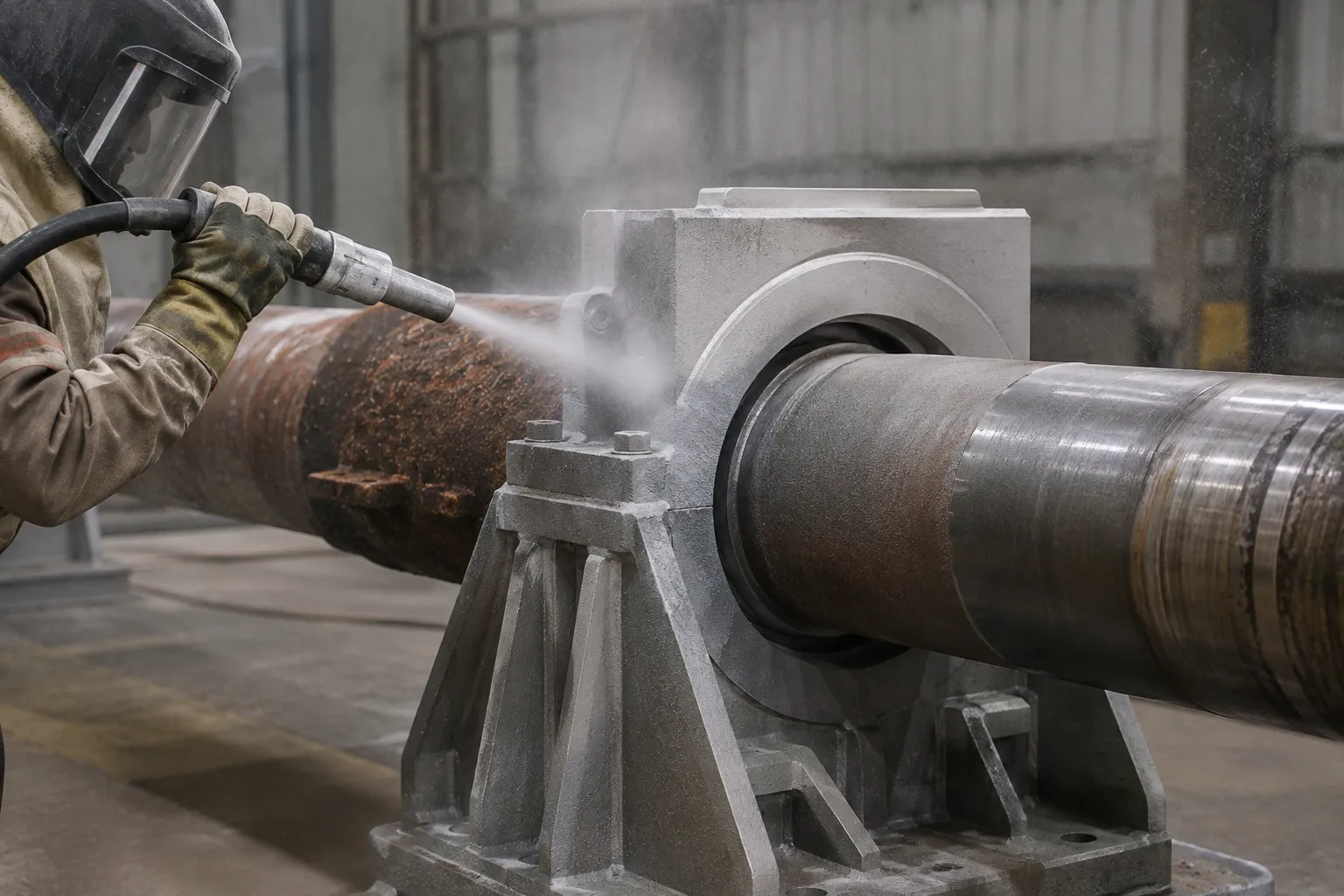
Sandblasting is a process that involves firing a blast media at high velocity when used in sheet metal fabrication. It is usually performed with an air-powered pressure gun. Two hoses are employed, with one containing compressed air that generates pressure. Media is extracted from a tank through the second hose by this pressure, before both air and sand are expelled together out of the gun. Sandblasting can be used to remove paint, and residues from oxidation, rust, scratches, and casting marks and is widely used for cleaning a surface before applying a finish, such as powder coating.
Blower Blasting
This blasting technique projects or accelerates particles using a fan known as a blower rather than compressed air. The pressure and acceleration of a blower are lower than those of compressed air from a compressor, and the processing is softer. On the other hand, it saves energy and keeps processing costs down because it doesn't require an energy-intensive compressor. It works well for gently processing broad areas.
Suction Blasting
By using a completely sealed processing area, the abrasive material is positioned in the air flow to scrape the object's surface as the particles are being drawn in during the blasting process. There is no need for a compressor because a blower (fan) is utilized for suction, and it is inexpensive. Because no abrasive material is sprayed, there is no dust produced, allowing work to be done in a clean atmosphere. The inner surface of the pipe can also be processed by inserting an abrasive at the inlet and sucking it out of the outlet.
Dry Ice blasting
Dry ice blasting is a type of sandblasting that uses dry ice pellets for the abrasive. Because the predicted dry ice dissolves into a gas when it hits the object, you don’t have to worry about particle residue. You don’t even have to get rid of the particles.
Shot Blasting :
Using centrifugal force, an impeller turned by a motor accelerates and disperses the particles in this approach. Blasting materials is a common term for the particles that are utilized. Additionally, the most common metal abrasives utilized are copper, aluminum, stainless steel, and steel.
WET TYPE BLASTING
Wet Blasting :
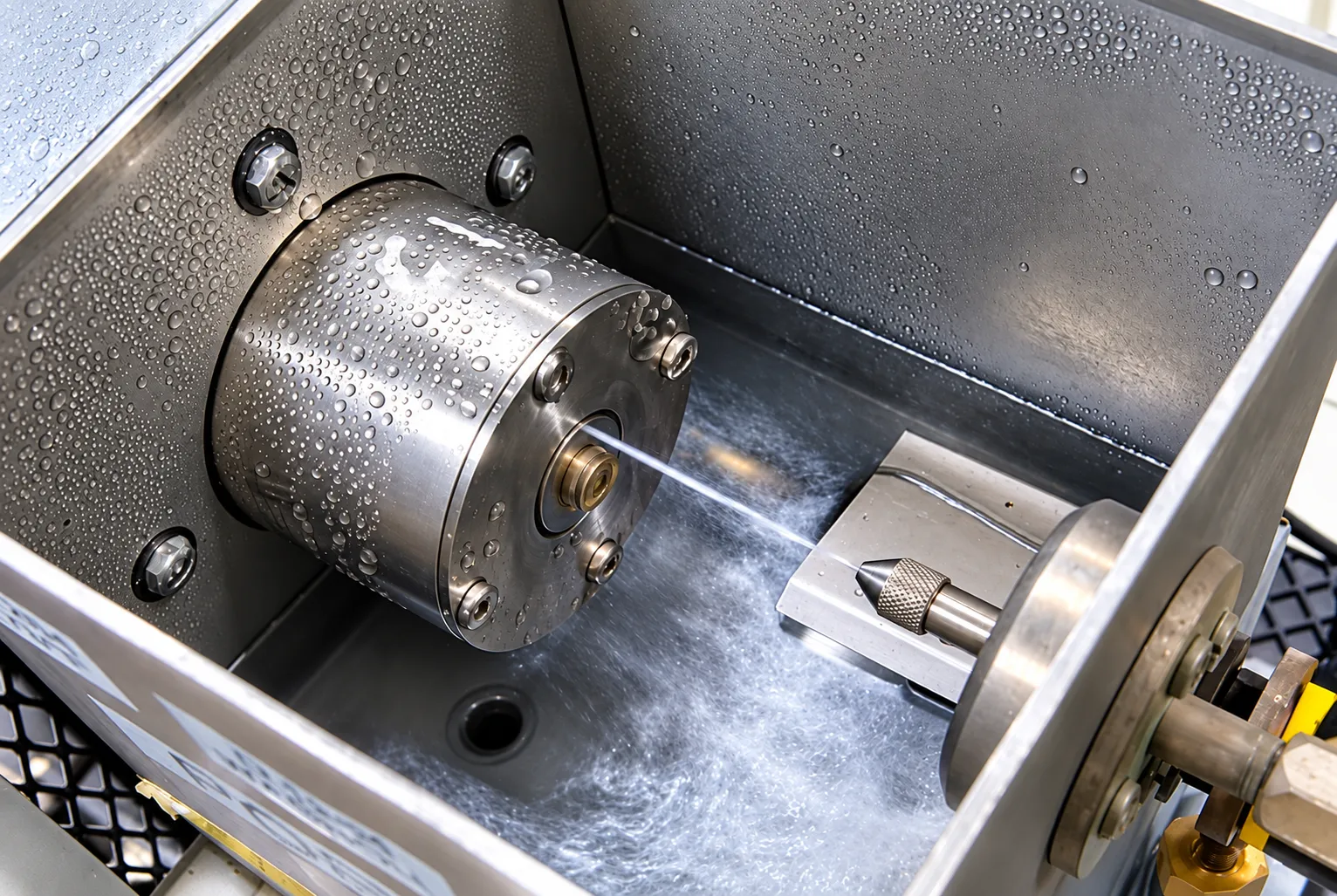
The term "liquid honing" is another name for it. This wet blasting technique uses compressed air to accelerate and spray a slurry a mixture of water and abrasive on the surface. It is possible to make use of even micro particles as small as a few microns in size, which cannot be handled by dry-type processing, because the abrasive is always combined with water and does not scatter during spraying.
Wet Shot Blasting :
Using an impeller, this mechanical wet blasting technique sprays. Similar to shot blasting, no compressor is needed because no pressurized air is used. This is a next-generation blasting technique that combines the advantages of wet blasting, which enables precise processing with extremely tiny particles while performing cleaning and processing simultaneously, and shot blasting, which can project particles across a wide area and treat vast regions.




















![Gear Drive Lubricant Selection [Gearbox Lubricants]](https://mosil.com/assets/uploads/blog/blog_1788344519_6a97f8c75d604.webp)


![The Ultimate Guide To Grease Thickeners [Thickening Agents]](https://mosil.com/assets/uploads/blog/blog_1754991852_689b0cec60a8a.jpg)