


Silicone oils are a unique class of synthetic fluids known for their exceptional thermal stability, chemical inertness and versatility. Unlike conventional synthetic oils derived from hydrocarbons, silicone oils are based on inorganic chemistry, which imparts distinctive performance characteristics not achievable with mineral oils or most organic synthetics. This blog explores how silicone oils are prepared, available viscosity grades, key advantages over other synthetic oils and synthetic grease and their applications in oils and greases.
How Silicone Oils Are Synthesized:
Although the words sound similar, silicon and silicone are fundamentally different materials. Silicon is a naturally occurring chemical element (symbol Si) obtained from silica found in sand and quartz and is a hard, brittle solid widely used in electronics, semiconductors, solar cells and metal alloys.
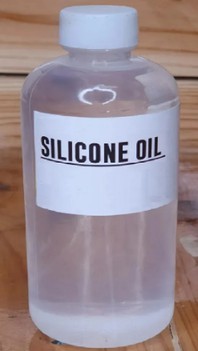
Silicone oil is a liquid synthetic material derived from silicon, used for lubrication, damping, sealing and insulation.
Silicon is the starting element, while silicone oil is a finished engineered fluid. Silicon derived from silica (sand) reacts with methyl chloride (and other organo-chlorides such as phenyl or fluorinated chlorides) to form chlorosilanes.
Chlorosilanes are hydrolyzed to produce silanol intermediates. Silanols condense to form siloxane chains (–Si–O–Si–).
Chain length control defines viscosity.
Introducing phenyl, fluorinated, hydrogen or vinyl groups at this stage determines the silicone oil type
All silicone oils share the same siloxane backbone; performance differences arise from the side groups and chain length introduced during polymerization.
One of the major advantages of silicone oils is their extremely wide viscosity range available without significantly changing chemical behavior. Typical Viscosity Range
Low viscosity: 0.65 cSt, 1 cSt, 5 cSt (excellent for release agents)
Medium to high viscosity: 50 cSt to 1,000,000 cSt (used for lubricating oils, greases, sealing etc.) Unlike hydrocarbon oils, silicone oils maintain viscosity more consistently across temperature extremes.
Why Silicone Oils Are Different from Other Synthetic Oils ?
Silicone oils differ fundamentally from other synthetic lubricants such as PAOs, Esters, PAGs, and Phosphate esters due to their inorganic backbone. They provide:
Outstanding Thermal & Oxidation Stability: Typically, from –70°C to +200°C
Minimal viscosity changes across wide temperature ranges: Very high Viscosity Index (VI), often >300.
Chemical Inertness: Non-reactive with metals, plastics, elastomers and most chemicals.
Low Surface Tension: Provides excellent spreading and wetting.
Electrical Insulation Properties: High dielectric strength.
Limitations (Compared to Other Synthetic Oils)
Lower load-carrying capability than PAO or Ester oils.
Poor boundary lubrication without additives.
Low solubility
Not compatible with other oils
Higher cost per unit volume.
Comparison with Types of Silicone Oils :
As shown in the below table, silicone oils are available in several types based on the organic groups attached to the siloxane backbone. Dimethyl silicone oils offer the widest viscosity range and are the most commonly used in lubrication and grease formulations. Silicone oil viscosity is typically measured at 25°c because silicone fluids exhibit a very low change in viscosity with temperature making 25°c a reliable reference point for comparison.
| Type of Silicone Oil | Chemical Structure Group | Key Properties | Typical Viscosity Range (25°C) | Common Applications |
|---|---|---|---|---|
| Dimethyl Silicone Oil (PDMS) | Methyl groups (–CH₃) | Excellent thermal stability, high viscosity index, water repellency, good dielectric properties | 0.65 cSt to 1,000,000 cSt | General-purpose lubrication, damping fluids, mold release agents, silicone greases |
| Phenyl-Methyl Silicone Oil | Methyl + Phenyl groups (–C₆H₅) | Improved low-temperature performance, enhanced radiation and oxidation resistance, better thermal stability | 5 cSt to 100,000 cSt | Aerospace fluids, heat transfer fluids, high-temperature lubrication, optical applications |
| Methyl-Hydrogen Silicone Oil | Methyl + Hydrogen (Si–H) | Chemically reactive, crosslinkable, surface-modifying rather than lubricating | 10 cSt to 1,000 cSt | Surface treatment, water repellents, textile finishing, intermediate for silicone synthesis |
| Fluorosilicone Oil | Fluorinated Alkyl groups | Superior fuel, solvent and chemical resistance; stable at high temperatures | 10 cSt to 100,000 cSt | Fuel system lubrication, chemical processing equipment, aerospace and automotive sealing |
| Vinyl Silicone Oil | Vinyl groups (–CH=CH₂) | Reactive, polymerizable, used in curing systems | 100 cSt to 100,000 cSt | Silicone elastomers, adhesives, sealants (not primary lubricants) |
Correlation Between Silicone Oil Properties and Lubricant Applications:
Inertness + low surface tension → ideal mould release agent
Inertness + Oxidation stability →long-life sealing, protective or food grade Lubricants
High VI + thermal stability → excellent damping fluid
Low volatility → vacuum systems and high-temperature static applications
Dielectric strength → preferred for electrical insulation
Water repellency → sealing and moisture protection
Material compatibility → safe for plastics and rubbers
When to Choose Silicone Oils and greases:
Silicone oils are best suited for light-load, sealing, damping and temperature-critical applications rather than heavy-load mechanical lubrication. Silicone oils are the preferred choice when:
Extreme temperature stability is critical
Chemical inertness is required with long service life and minimal degradation
Material compatibility with plastics and elastomers is essential
However, for high-load, high-wear applications, PAO or Ester-based lubricants may be more suitable.
WHEN CHOOSING A LUBRICANT FOR YOUR APPLICATION, IT IS IMPORTANT TO CONSIDER FACTORS SUCH AS THE OPERATING TEMPERATURE, LOAD, SPEED AND ENVIRONMENT. CONSULT WITH A LUBRICATION EXPERT OR THE EQUIPMENT MANUFACTURER TO SELECT THE BEST LUBRICANT FOR YOUR NEEDS.























































![Gear Drive Lubricant Selection [Gearbox Lubricants]](https://mosil.com/assets/uploads/blog/blog_1788344519_6a97f8c75d604.webp)







![The Ultimate Guide To Grease Thickeners [Thickening Agents]](https://mosil.com/assets/uploads/blog/blog_1754991852_689b0cec60a8a.jpg)